
Somewhere along the way, we were taught to tough it out. To accept pain as a normal by-product of busy lives, ageing bodies, or “just how things are now.” Sore necks become desk-job badges of honour. Tight lower backs are laughed off as part of being active. Headaches are brushed aside with another coffee and a couple of painkillers. The problem isn’t resilience. The problem is that normalising pain quietly teaches the nervous system to tolerate dysfunction instead of correcting it.
Pain is not weakness tapping you on the shoulder. It is information. And when that information is repeatedly ignored, the nervous system adapts in ways that are far from helpful.
Pain Is a Signal, Not a Personality Trait
Pain exists to protect you. Acute pain alerts the brain to a potential threat, prompting changes in movement, posture, and muscle tone so tissues can recover. When pain is dismissed or minimised, the signal does not disappear. It simply changes its strategy. The nervous system becomes more sensitive, more guarded, and less efficient at regulating movement.
Research consistently shows that persistent pain is associated with changes in how the brain processes sensory input and controls muscles. This phenomenon, often referred to as central sensitisation, means the nervous system becomes better at producing pain, even when the original tissue issue has resolved. In other words, ignoring pain doesn’t make you tougher. It trains your nervous system to stay on high alert.
What Happens Neurologically When Pain Is “Just Lived With”
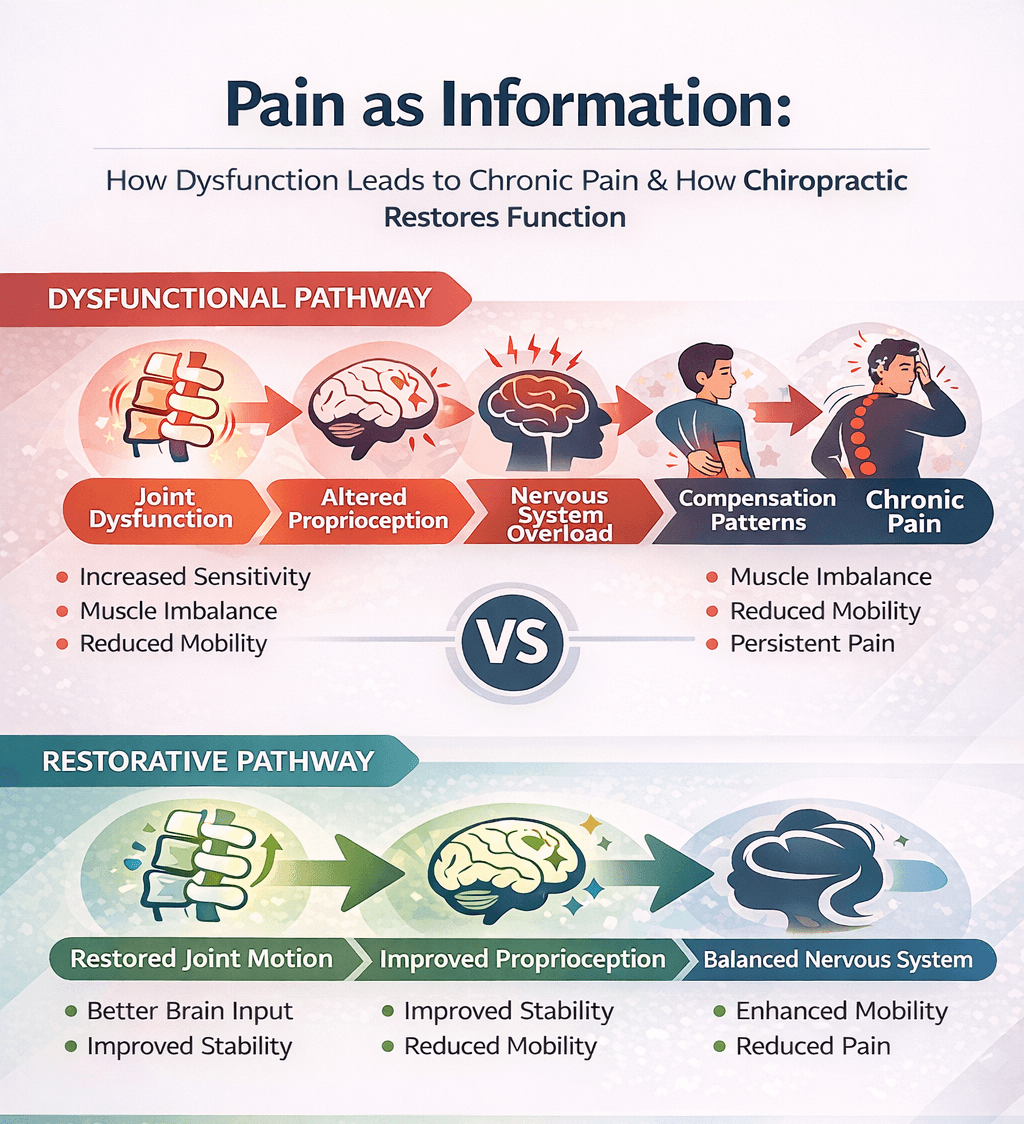
When joint movement is restricted and proper motion is lost, the quality of sensory information travelling from the body to the brain is reduced. This is where subluxation becomes clinically relevant, not as a structural problem to chase, but as a neurological one. Altered joint motion changes proprioceptive input, which the brain relies on to coordinate movement, balance, and muscle tone.
Studies have shown that dysfunctional spinal joints can alter motor control and increase muscle inhibition, even without severe pain present. Over time, this creates compensation patterns where some muscles overwork while others essentially switch off. The result is a body that feels stiff, weak, or unstable, yet is often told everything is “normal.”
At our Wellington chiropractic clinic, we see this daily. People arrive not because the pain is unbearable, but because they are exhausted from functioning around it.
The Cost of Normalising Pain
Normalising pain delays care, and delayed care changes outcomes. Persistent musculoskeletal pain is now one of the leading causes of disability worldwide, accounting for significant work absenteeism and reduced quality of life. In New Zealand alone, chronic pain affects roughly one in five adults, with enormous downstream effects on mental health, sleep, and physical activity levels.
From a neurological perspective, the longer pain persists, the more entrenched maladaptive movement patterns become. The brain becomes less efficient at distinguishing safe movement from threat, leading to fear-avoidance behaviours. People stop rotating fully, stop loading confidently, and stop trusting their bodies. This is not because they are fragile, but because the nervous system is doing exactly what it has been trained to do: protect.
Why “It’s Not That Bad” Is a Dangerous Thought
Pain does not need to be severe to be significant. Mild but persistent discomfort often reflects early joint dysfunction and altered neuromuscular control. This is the window where care is most effective, before compensations stack and the nervous system locks into protective patterns.
Diminishing pain also diminishes curiosity. When symptoms are brushed aside, the deeper question is never asked: why is this happening? Is the nervous system overloaded? Is movement input reduced? Is recovery capacity being exceeded? Without addressing these questions, pain relief becomes temporary at best.
A Chiropractic Perspective: Restore Input, Improve Output
Chiropractic care, particularly when grounded in a neurological and movement-based philosophy, aims to improve the quality of information entering the nervous system. Precise chiropractic adjustments restore joint motion, enhancing proprioceptive feedback to the brain. This improved input supports better motor control, reduced muscle inhibition, and more efficient regulation of tone and movement.
Evidence shows that spinal adjustments can influence cortical processing and sensorimotor integration, essentially helping the brain recalibrate how it perceives and controls the body. This is why many people report not just less pain, but improved ease of movement, better balance, and a greater sense of control after care.
For those searching for a chiropractor in Wellington, the goal is not to chase symptoms endlessly, but to support a nervous system that can adapt, recover, and perform without constant protective tension.
Pain Deserves Attention, Not Acceptance
Listening to pain does not mean catastrophising it. It means respecting it. Pain is feedback that something in the system needs support, whether that is movement, recovery, load management, or neurological input. Addressed early, it often resolves efficiently. Ignored, it tends to spread, adapt, and linger.
If you have been told your pain is “normal,” consider this a gentle challenge. Common does not mean optimal. Living with pain is not a rite of passage, and your nervous system deserves better than constant compensation.
At Limitless Chiropractic, we believe people in Wellington deserve care that helps them move freely, think clearly, and live without unnecessary limitation. Pain is not the enemy. Silence is.
References
- Apkarian AV, Hashmi JA, Baliki MN. Pain and the brain: specificity and plasticity of the brain in clinical chronic pain. Pain. 2011.
- Hodges PW, Tucker K. Moving differently in pain: A new theory to explain the adaptation to pain. Pain. 2011.
- Haavik H, Murphy B. The role of spinal manipulation in addressing central nervous system dysfunction. Journal of Electromyography and Kinesiology. 2012.
- Woolf CJ. Central sensitization: implications for the diagnosis and treatment of pain. Pain. 2011.
- Vos T et al. Global prevalence of chronic pain and disability. The Lancet. 2020.
Experience Limitless Movement Chiropractic Care in Wellington
If you’re in Wellington and looking for expert chiropractic care, we’re here to help. At Limitless Chiropractic, we focus on helping you move better, feel stronger, and live without limits. Book your appointment today and take the first step toward a healthier, more mobile you!
Ready to begin or continue your healing journey? Let’s work together to unlock your body’s natural potential for wellness.
Book Your Limitless Journey Today
or call us at (04) 891 0911