
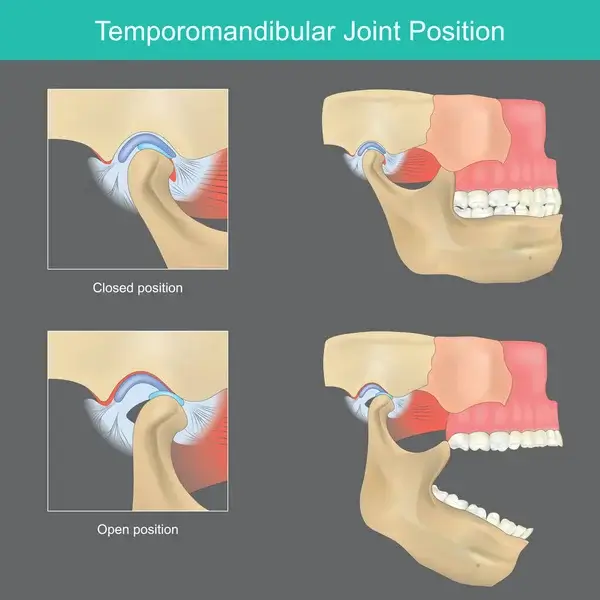
Temporomandibular joint (TMJ) issues are sneaky. They show up when you chew, when you talk, when you yawn, and sometimes when you’re doing absolutely nothing at all. For many Wellington locals, the jaw becomes tight, clicky, stiff, or downright painful—and the ripple effect through the nervous system can turn a simple problem into a full-body experience. People often assume TMJ problems are just “jaw issues,” but your jaw is far more than a hinge. It’s a neurologically driven movement system powered by cranial nerves, deep stabilising muscles, the upper cervical spine, and even your breathing pattern. When any part of this interconnected system loses proper motion—whether through joint dysfunction, stress, grinding, posture or subluxation—the jaw’s mechanics change, and the symptoms begin.
As a chiropractor in Wellington, one of the most common patterns I see is a nervous system under strain. When the brain feels unsafe, muscles tighten, movement becomes guarded, and the TMJ becomes another victim of that protective tension. That’s why chiropractic care isn’t simply about “aligning the jaw”—it’s about restoring clear communication through the nervous system so the jaw can move the way it was designed to.
Understanding TMJ Through a Neurological Lens
The TMJ is controlled by the trigeminal nerve, one of the most powerful cranial nerves in your body. It governs chewing, jaw opening and closing, and key sensory information from your face. Research shows that increased stress, inflammation, and altered cervical mechanics can heighten trigeminal nerve sensitivity, creating jaw pain, clenching, headaches and even ear discomfort (Suvinen et al., 2005; Okeson, 2013).
When the upper cervical spine develops joint dysfunction or subluxation, it can alter how the brain interprets position, pressure, and movement. This affects not only your jaw mechanics, but your whole postural system. Statistics show up to 70% of TMJ sufferers also report neck pain, highlighting how closely these two regions work together (Scrivani et al., 2008).
When the nervous system is overloaded, muscle recruitment changes. The masseter becomes hyperactive. The temporalis tightens. The small stabilisers around the jaw lose coordination. The result is a jaw that feels like it’s working overtime and still not getting the job done.
This is why TMJ care must always consider the spine, posture, and breathing—not just the jaw itself.
How Chiropractic Care Supports TMJ Function
At our Wellington chiropractic clinic, we look beyond the symptoms. TMJ dysfunction is often a sign of deeper neurological imbalance and altered movement patterns. Chiropractic care restores clearer communication between the brain and body by addressing subluxations and improving joint motion in the spine—particularly the upper cervical region.
Improved spinal motion reduces excessive protective tone in the muscles controlling the jaw. A well-regulated nervous system allows the jaw to coordinate movements with less strain and more precision.
Cranial care also plays a key role. When the cranial bones or surrounding soft tissues lose their natural mobility, the jaw often compensates. Gentle cranial adjustments help restore fluidity, reduce pressure on the trigeminal system and support balanced temporomandibular movement.
Research has demonstrated that conservative manual care, including chiropractic and mobilisation techniques, can improve jaw opening, reduce pain and enhance functional movement (La Touche et al., 2009). More importantly, neurological balance decreases the body’s overall stress load, helping people adapt better to daily demands without the jaw bearing the brunt of it.
TMJ, Posture and the Wellington Lifestyle
Many Wellington professionals spend long hours at desks, in cars, or in meetings. Forward head posture increases pressure on the jaw by altering the orientation of the mandible. Studies show that for every 2–3 cm the head shifts forward, the tension through the jaw and cervical structures increases significantly (Fernández-de-las-Peñas et al., 2007).
Combine that with stress, clenching, or disrupted sleep, and the TMJ becomes overloaded.
Chiropractic care helps break this cycle by restoring proper spinal mechanics and reducing nervous system irritation. The jaw becomes freer, movement becomes easier and the body moves from protection to performance.
Over time, people often notice less clenching, smoother chewing, fewer headaches, and a calmer nervous system overall. This is where the real magic happens: your body starts adapting to stress rather than reacting to it.
When the Jaw Moves Better, Life Moves Better
Your TMJ isn’t isolated—it’s part of your body’s master control system. When the nervous system is functioning well, jaw movement becomes smoother, muscles relax, and the whole face feels lighter. When the spine moves well, the jaw gains stability. And when the brain feels safe, the body stops bracing and starts healing.
If your jaw clicks, pops, grinds, aches, or feels tight, chiropractic care may be the missing link. And if you’re searching for a chiropractor in Wellington who takes a neurological and movement-based approach, our clinic is ready to help you move, feel and function at your best—jaw included.
Scientific References
Fernández-de-las-Peñas, C., et al. (2007). Forward head posture and increased temporalis and masseter electromyographic activity in chronic tension-type headache. Clinical Journal of Pain, 23(4), 346–352.
La Touche, R., et al. (2009). The effect of manual therapy on the temporomandibular joint. Journal of Oral Rehabilitation, 36(9), 625–639.
Okeson, J. (2013). Management of Temporomandibular Disorders and Occlusion. Mosby.
Scrivani, S. J., et al. (2008). Temporomandibular disorders. New England Journal of Medicine, 359(25), 2693–2705.
Suvinen, T., et al. (2005). Orofacial pain and temporomandibular disorders: A neurophysiological and clinical overview. Journal of Oral Rehabilitation, 32(1), 1–20.
Experience Limitless Movement Chiropractic Care in Wellington
If you’re in Wellington and looking for expert chiropractic care, we’re here to help. At Limitless Chiropractic, we focus on helping you move better, feel stronger, and live without limits. Book your appointment today and take the first step toward a healthier, more mobile you!
Ready to begin or continue your healing journey? Let’s work together to unlock your body’s natural potential for wellness.
Book Your Limitless Journey Today
or call us at (04) 891 0911